Welcome to our English lessons

I hope you learn a lot from our lessons. Sometimes we will have fun.

Speak and write in every lessen. Be an active participant.

Who is today’s class champion number 1? Which city is this? Write your answer in the the chat box.

Who is today’s class champion number 1? Which city is this? Write your answer in the the chat box.

Who is today’s class champion number 2? What is on the menu of this Help Yourself English Website? You will need to click on the link in the chat box.

Main Idea – exam revision

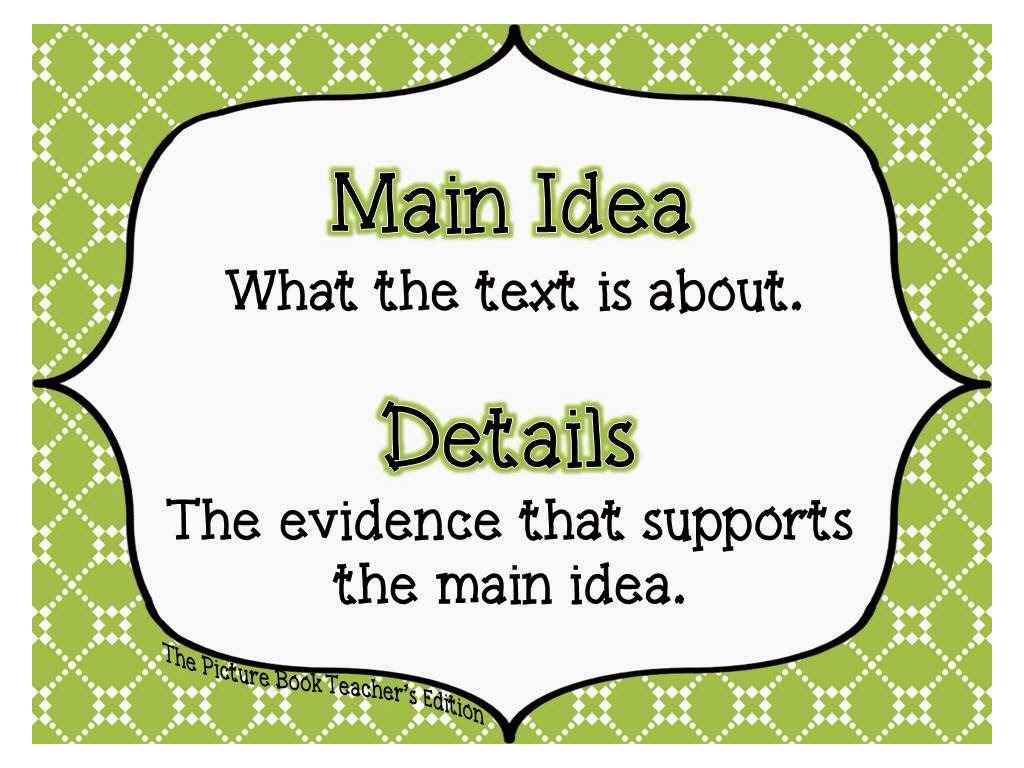
Image result for main idea

Please note, this article has been re-posted. It has not been updated.

Main idea is important

Identifying the main idea is one of the most important reading skills. You need to be able to identify the main idea to answer some of the reading questions in the mid-term exam. The understanding the main idea will help you in several ways:

  1. you will understand the text. You will understand the author’s point.
  2. you will be able to choose the correct paragraph heading or text title.
  3. it will help you understand the context which in turn will help you identify the meaning of new words.
  4. you will be able to answer the reference question. The means getting the meaning of specific pronouns (he, she, it, they, etc.)

Self-Learning


Do exercises A, B and C below (if you did not do these in class)

For further study there are 2 options (choices)

Option 1.Go straight to the exam revision quizzes https://helpyourselfenglish.wordpress.com/pre-intermediate-quizzes/

There are more reading quizzes on the KSU CFY ELSD LMS (Blackboard)

Option 2. Develop your skill step by step with explanations, keys. video tutorials (lessons) and exercises.  https://helpyourselfenglish.wordpress.com/paragraphs-identifying-the-main-idea/


Exercise A

Test your understanding of topic sentence. Topic sentences ofen give the main idea.

1. The topic sentence introduces the topic

a. true   b. false

2.   The topic sentence must be a complete sentence will a full stop.

a. true b. false

3. The topic sentence or main idea can be a question.

a. true  b. false

3. How to pass your exams

a.  main point   b. main topic   c. topic sentence  d.  main idea

4. The topic sentence is often the same as the main idea

a. true  b. false

5. The topic sentence is…

a. usually the second sentence in a paragraph    b. never the first sentence in a      paragraph.   c. usually the first or second sentence.

6. The topic sentence is sometimes the last sentence in a paragraph

a. true  b. false

7. All of these can help you find the main topic in a paragraph: the title of the text, subheading, pictures, repeated words, repeated ideas, examples and other supporting details

a. true b. false

8. Sometimes the first sentence in a paragraph is an introductory sentence, it provides context and is not the topic sentence.

a. true b. false

9. A topic sentence is…

a. a more specific statement on the topic     b. An example of the topic or explanation of the topic     c. The most general statement on the topic

10. Reading the whole paragraph will help will not help you find the topic sentence

a. true b. false

11.  You are unsure whether the first or second sentence is the topic sentence. How do you decide?

a. choose the first sentence    b. look at the examples and explanations and decide whether they support the first or second sentence best    c. choose the second sentence

Answers

11. b  10. b    9. c    8. a   7. a   6.a.  5. c   4. a   3. b   2. a.   1. a

Exercise B

Test your understanding of main idea. For some of the questions, there are 2 correct answers.

  1. The main idea is often the same as the topic sentence.

a. true b. false

2. The main idea is the main topic + main point

a. true b. false

3. Great Britain

a. Main idea    b. main topic    c. topic sentence   d. main point

4. KSA is my favourite country.

a. main topic    b. topic sentence   c. main point   d. main idea

5. The year 2030 will be a great year for KSA. The words in italics are

a. main topic    b. topic sentence   c. main point   d. main idea

6. The main idea is always the same as the topic sentence.

a. true  b. false

7. Reading the whole paragraph will help you find the main idea.

a. true  b. false

8. The title of the text, subheadings and pictures will help you guess the main idea of the text.

a. true  b. false

9.  The main idea must be a complete sentence will a full stop.

a. true  b. false

10. The main idea is always given in the topic sentence.

a. true  b. false

11.  Which is the main idea?

a.  You should revise for your English exams.  b. You should revise for your exams    c. exam revision   d. is important

12. Looking for repeated ideas will help you find the main idea.

a. true  b. false

13. Summarizing the text in your own words (paragraph, whole text) will not help you understand the main idea.

a. true  b. false

14. Understating the main idea of each paragraph, especially the introduction and conclusion will help you find the main idea of a whole text (many paragraphs).

a. true  b. false

15. Understanding the main idea will help you choose the correct heading for a paragraph or help you choose the correct title for the text.

a. true  b. false


Answers

15. a  14. a  13. b   12. a

11. a. and b.   Note: you will need to read the whole paragraph to know whether the topic is more general (you should revise for your exam) or more specific (you should revise for your English exam).

10. b   9. a   8. a  7.a   6.b  5. c

4. b. and d.   Note: KSA is my favourite country can be the topic sentence and main idea.

3.a    2. a    1. a


Exercise C

Read the passage about Peru and answer the questions

Other attractions are Machu Picchu in the southern central Andes and Lake Titicaca to the south. Lake Titicaca is the highest lake in the world; it is also the largest lake in South America. Machu Picchu, which was built in approximately 1438, is the ancient city of the Inca people. The city was unknown internationally until 1911. In 2007 it was voted one of the most important and beautiful places in the world.

Questions

  1. What’s the main topic?

a. Attractions in South America  b.  Machu Picchu

2. What’s the main idea?

a. Machu Picchu, is the ancient city of the Inca people

b. Machu Picchu in the southern central Andes and Lake Titicaca to the South

c. Machu Picchu and Lake Titicaca are good places to visit in Peru.

3. Is this supporting detail?

Lake Titicaca is the highest lake in the world.

4. Choose the best heading for the paragraph

a. Machu Picchu    b. Lakes of the world    c. Lake Titicaca    d. Famous places in Peru


Answers 4. d  3. yes   2. c    1. a

Now check the details support your choice of heading.


Final CBT Exam Spec and Exam Tips

Image result for computer based testFinal CBT exam specification

This is for level A medical track 107 students only.

http://cfy.ksu.edu.sa/male/sites/py.ksu.edu.sa.male/files/images/ENGL%20107%20Sem1%20Final%20Exam.pdf

KSU CFY have provided practice exercises below:

https://lms.ksu.edu.sa/

Do not use the online practice link. Use the other links.

Note: the CFY LMS extra practice links do not cover all of the grammar points for your final exam. See the extra links under ” Grammar Practice”.

menu-2.png


Vocabulary

This is the most important area to learn. This is because vocabulary helps with reading and listening too.

Learn the vocabulary in your QSkills textbooks Unit 1 to 3

Learn the vocabulary list from KSU. See Exam specifications.

Learn the vocabulary CareerPaths- Medical: Units 11-15 and Units 1-5


Grammar Practice

Important extra practice exercises for your final exam. These are not included on the CFY LMS.

noun/verb collocations

https://testmoz.com/525472

https://www.englisch-hilfen.de/en/exercises/structures/verbs_nouns2.htm

Word families (word form)

https://www.ecenglish.com/learnenglish/lessons/word-forms-quiz

http://www.eslcafe.com/quiz/wordf1.html

Subject-verb agreement:

https://www.quia.com/quiz/281290.html?AP_rand=1234642011

https://www.grammarbook.com/grammar_quiz/subject_verb_agreement_1.asp

Prefixes im- un- :

https://www.ecenglish.com/learnenglish/lessons/prefixes-un-dis-im-mis

So vs because:

http://a4esl.org/q/h/lb/sobe.html

http://www.softschools.com/quizzes/grammar/because_so/quiz2425.html

There is, there are, it’s:

https://www.really-learn-english.com/it-is-vs-there-is.html

https://www.englishclub.com/grammar/subject-verb-agreement-there-is-there-are-quiz.htm

Adjectives: -ful vs -al

https://www.esl-lounge.com/student/grammar/3g53-suffixes-gap-fill.php


(

More practice links:

You need only study/revise the grammar items shown in the exam specification

Beginner / elementary

https://helpyourselfenglish.wordpress.com/online-grammar-quizzes/

Pre-intermediate

https://helpyourselfenglish.wordpress.com/intermediate-2/

Reading Practice

You can look up (use an English / English dictionary or translate) any word except the bold words. You must use root, prefix, suffix and context to guess the meaning.

Readings on many topics here:

https://helpyourselfenglish.wordpress.com/reading-quizzes-high/

Peru

https://testmozusercontent.com/290188/student

Brazilia

https://testmozusercontent.com/293253/student

China

https://testmozusercontent.com/295823/student


Exam tips

  1. Read the questions very carefully.
  2. Read the questions and guess answers before you read or listen.
  3. Listen carefully as you will only hear the audio twice.
  4. Check your answers before you finish your exam.
  5. Don’t try to cheat in the exam.

More tips

Image result for exam tips

Autonomous Learning – Be in Control

unnamed

Take control of your learning

An autonomous learner takes control and is responsible for his/her own learning. He/ she is a more successful student because of this.

You can ask the teacher to help you take control of your learning.

Tips for taking control:

  • come prepared for class,
  • always participate fully in class and always try your best. Never just copy,
  • ask if you don’t understand. Don’t be shy.
  • make notes in class and take a picture of the whiteboard (with the teacher’s permission),
  • continue to study outside the classroom after each lesson,
    • read the pages and exercises covered in class. If you are unsure of anything ask the teacher the next day,
    • read your notes and look at the pictures from the whiteboard,
    • do the extra work the teacher provides if this will help you learn,
    • do the KSU CFY LMS (Blackboard exercises),
  • collaborate. Work with other students inside and outside the classroom.

Take control and invest in yourself. Investing in yourself is the best deal you will get.


Debating Club

Screenshot 2019-11-25 at 10.27.07 AM

Improve your speaking confidence- join the KSU CFY debating club

The speaking Exam is coming!

Improve your speaking confidence by taking part in the debating club every Monday in the Hub, room 2305. Go to the Hub to find out more details.

Speaking exam dates:

All Science and Business Courses:  Tuesday, 17th of December  2019

All Medical and Humanities Courses:  Wednesday, 18th of December  2019


Inter-class debate

The picture shows a debate between two different classes.

Below a student who took part in the debate writes about his experience.

The student’s article was published in the first issue of the KSU CFY English department magazine (now called Spotlight):

http://www.elsdportal.net/downloads/docs/2417_April_2018.pdf

Class Debate: Food for Thought by Ibrahim Al Sanad

On Wednesday 21/3/2018 we took part in an inter-class debate in the main auditorium. We are medical track level C students and we debated the interesting topic of whether or not obesity is a disease. The debate was organized because the students from two classes had been asking to do it for quite some time during this semester. Further, our teachers (Mr. Roger Butler class and Mr. Sam Harrison) felt it would improve our speaking skills, boost our speaking confidence and it would be a fun activity.

The students went to the debate stage with some expectations in mind. One of those expectations was that the judges were going to be the judges, but the nice revelation was that the debate was the self-evaluation type which was a big factor in the students’ enthusiasm.

The debate, to the student’s surprise, was so competitive and exciting to the point of friendly rivalry. A funny thing happened in the debate. One of the students in my team made a smart counter-argument.

A student from the other class argued that many people don’t believe obesity is a disease. Our counter was ”there are people who don’t believe that the earth is a sphere”. And that was an important factor for why I believe our argument was superior to theirs.

Even though the outcome was a tie. A few of the students have noted they have had second thoughts about their views on the subject. I myself had learned that a piece of information without a respectable source is not only useless, but it can even hurt your case. A skill I’ve learned is how to construct an argument and a counter-argument in a palatable, objective and non- personal way.

To conclude, this debate was a nice experience and a great time investment. I heard some rumors that KSU, hopefully, will be doing a debate tournament between the C grade students next year. I actually feel it would be a nice addition to the curriculum of CFY’s English program.

Collaborative Working (Team Project) – Updated

Learn more by working together

Do you want to take part in a team project?

If you would like to work on a project in a group, you can ask your teacher. Below is a project where students worked collaboratively (in a group). Working collaboratively will help develop your English skills and teamworking skills. This project was done using a shared Google document. All teams could see each of the other team’s project on the smartboard as it was being written.

Here is a project on “Four systems of the body” that students have completed.

4 Systems V2

Here is the (view only) link to the 4 systems of the body document/project:  https://docs.google.com/document/d/1R4akaOepNGv5SJrmiJadkF6zggD745lnu9IZC03b4X8/edit?usp=sharing


For teachers:

In short, make a simple two by two grid (table) using Google Docs (see example below). Make sure you label each box (or cell)  A, B, C or D.  Give Ss a link and editing (input text) rights to the document, thus it becomes a collaborative document or project. A student from group A put his team’s responses into box A. Simptauneatouly a student from team B puts his team’s response into box B and so on.  The Ss’ responses appear instantly on your document (which is displayed on the smartboard) as they type. The collaborative document or project is set up by sharing a link to the document with the Ss. How does this happen? Ss are invited by email using Google Docs shared editing function. Ss will first need to download the Google Docs App otherwise, while they will still be able to view, they will not be able to edit. Each student will also need a Google account. Warn contributors that their identities will show up as they write and only submit constructive input.

Example:

pasted image4

Want to know more?

Here you can read more about using Google Docs in the classroom

https://teachingenglishusinggoogledocs.wordpress.com/page/


Final exam preparation – making notes

A student’s notes

Below is an example of a student’s notes from the EFM textbook. Here a student has made makes notes that will help him remember medical vocabulary. The student’s notes are in the form of a mind map. The map show terms used to describe relative positions in the body and he includes small and simple explanatory diagrams.

Making notes can help you

Making notes can help you prepare for your final CBT exam. Notes can help you remember not just medical vocabulary, but also general vocabulary and grammar too.

mind-map-medical-positioning.jpg

Mind map by Abdulelah Ali.

Medical vocabulary in the final CBT exam

There will be 10 medical vocabulary questions in the final CBT exam. But this does not mean that in the final CBT exam there definitely will be questions about terms used to describe relative positions in the body.